
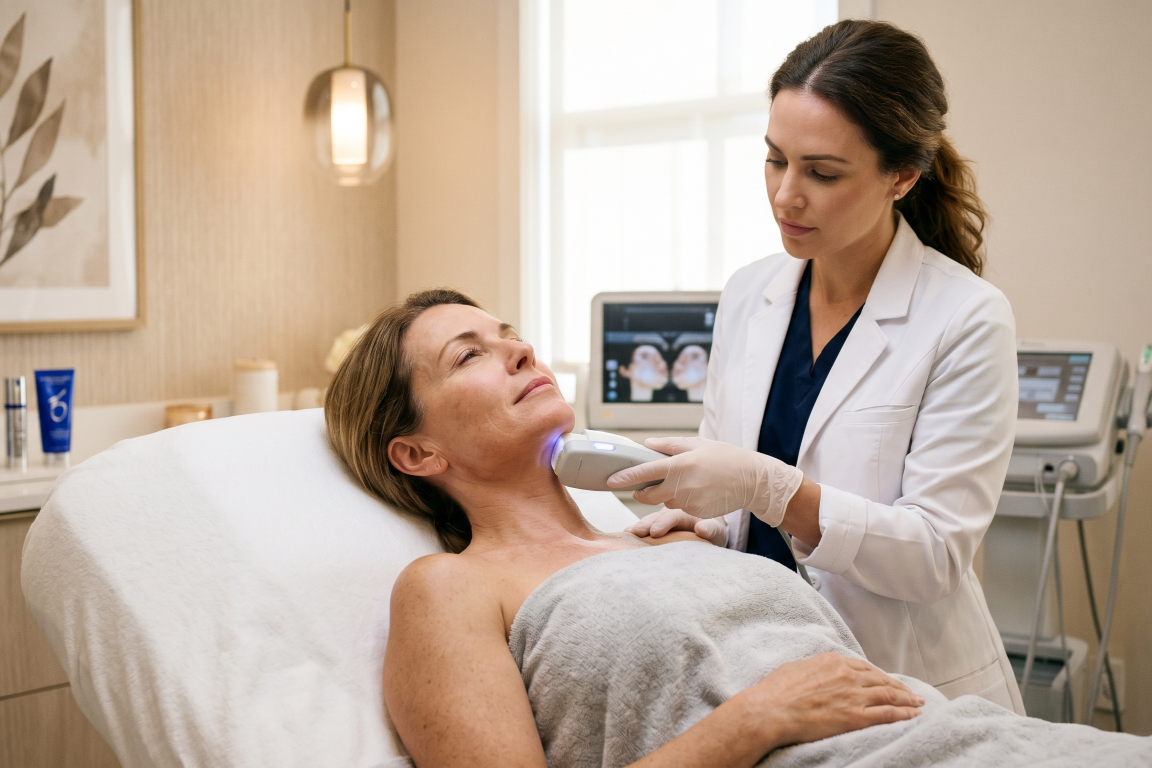

Two ultrasound devices. One goal: tighter, lifted skin without surgery. If you have been researching non-surgical skin tightening in Castle Rock, CO, you have probably landed on the same two names over and over again. Sofwave and Ultherapy both use ultrasound energy to stimulate collagen production deep beneath the skin's surface. Both are FDA-cleared. Both promise real lifting and firming results.
But the experience of actually sitting in the treatment chair, the technology driving each device, and the timeline to visible improvement could not be more different.
How each technology works
Sofwave and Ultherapy both fall under the umbrella of ultrasound-based skin rejuvenation, but the way they deliver that energy differs in important ways.
Sofwave uses a proprietary system called SUPERB (Synchronous Ultrasound Parallel Beam) technology. Seven parallel transducers make direct contact with the skin and deliver focused energy to a depth of approximately 1.5 mm in the mid-dermis. This is the layer where the majority of collagen and elastin fibers live. The device heats the tissue to 60–70°C, which is the threshold needed to trigger new collagen and elastin production. An integrated cooling system called SofCool protects the outermost layer of skin from thermal damage during the entire session.
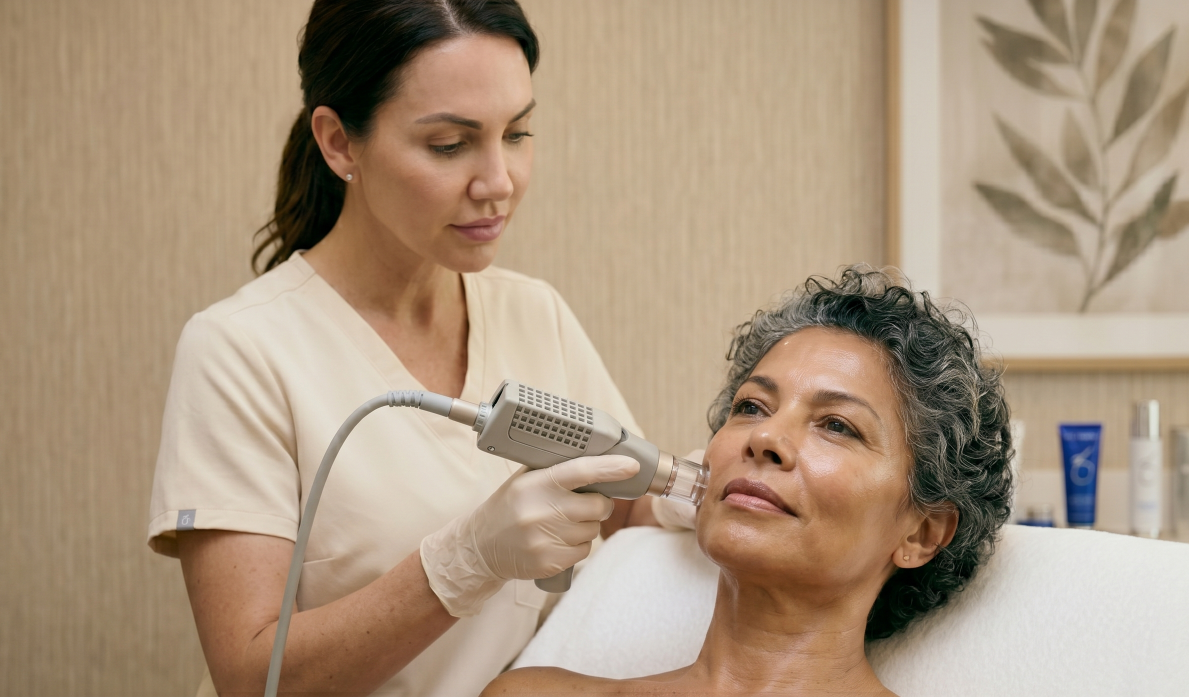
Ultherapy uses micro-focused ultrasound with imaging (MFU-I) to reach deeper tissue layers. The device can target depths of 1.5 mm, 3.0 mm, and 4.5 mm, including the SMAS (superficial musculoaponeurotic system), which is the same connective tissue layer that surgeons reposition during a traditional facelift. Built-in ultrasound imaging allows the provider to visualize the tissue before delivering energy. This deeper reach is the central selling point of Ultherapy and the reason it has been marketed as the closest thing to a surgical lift you can get without going under the knife.
The distinction matters because depth determines both the type of result and the treatment experience. More on that below.
Sofwave vs. Ultherapy at a glance
The pain factor: which one hurts less?
This is often the deciding question, and the answer is clear. Sofwave is significantly more comfortable than Ultherapy.
Ultherapy targets deeper tissue layers, which means the energy pulses feel more intense. Patients frequently describe the sensation as sharp, zapping heat, especially across areas with less soft tissue padding, like the forehead, jawline, and neck. Many providers recommend topical numbing cream, oral pain relievers, or even nerve blocks before starting an Ultherapy session. Online patient reviews consistently flag pain as the biggest downside of the treatment.
Sofwave takes a different approach. Because it targets a shallower depth in the mid-dermis and uses built-in SofCool technology to protect the skin's surface, the procedure is considerably more tolerable. Most patients describe it as warm with occasional mild stinging. Numbing cream is optional and frequently unnecessary. This comfort advantage also makes patients more willing to return for maintenance sessions down the line, which matters for long-term results.
Quick takeaway: If pain tolerance is a concern for you, Sofwave is the gentler choice by a wide margin. Learn more about what to expect during a Sofwave session in Castle Rock.
Results: how do they actually compare?
Clinical outcomes for both treatments are comparable when it comes to overall skin tightening and lifting. Patients see measurable improvement in jawline definition, brow position, neck laxity, and fine lines with either device. The mechanisms overlap but are not identical, and the timelines differ.
With Sofwave, many patients notice initial firming within four to six weeks. The device stimulates collagen, elastin, and hyaluronic acid production in the mid-dermis, and these structural proteins continue building for up to three months after a single session.
Ultherapy results tend to develop more gradually. Because the energy reaches the SMAS layer, the lifting effect can be more pronounced in patients with significant sagging along the jawline and neck. Full results generally take two to three months to emerge, with continued improvement over six months
Both treatments produce results that last roughly one to two years, depending on the patient's age, skin condition, and lifestyle.
Who is each treatment best for?
The right choice depends on where you are starting and what you are trying to achieve.
Sofwave may be the better fit if you:
• Have mild to moderate skin laxity and want to get ahead of further sagging before it becomes severe
• Prioritize comfort and speed during treatment, or have a low pain threshold
Sofwave also works well as a complement to other treatments. Some patients pair it with dermal fillers in Castle Rock to restore volume while simultaneously improving firmness. Others combine it with microneedling with PRP in Castle Rock for a more comprehensive skin rejuvenation plan that targets both texture and structure.
Ultherapy may be the better fit if you:
• Have more advanced sagging, particularly along the jawline and neck, and are looking for deeper structural lifting
• Are comfortable with a more intense treatment experience and willing to manage discomfort with pain relief options
Neither treatment replaces a surgical facelift for patients with severe skin laxity. But for the majority of people in their late 30s through 60s who want visible tightening without surgery or significant downtime, both Sofwave and Ultherapy deliver measurable improvement.
Why treatment depth is not the whole story
Ultherapy's ability to reach the SMAS layer is often positioned as its biggest advantage. And on paper, treating deeper tissue sounds like it should produce better results. In practice, the clinical outcomes tell a more nuanced story.
Both devices produce comparable lifting and tightening for most patients with mild to moderate laxity. The practical difference is that Sofwave achieves those results while treating a shallower depth, which is what makes the procedure so much more comfortable. Deeper is not automatically better. The mid-dermis is where the bulk of your collagen and elastin live, and that is exactly where Sofwave concentrates its energy.
There is also a safety consideration. Ultherapy's deeper energy delivery carries a higher risk of unintended fat loss (fat atrophy) if the device is not administered with precise technique. Sofwave avoids this concern entirely because it does not penetrate to the depth where subcutaneous fat sits.
What to expect during a Sofwave treatment
A full-face Sofwave treatment typically takes about 30 to 45 minutes from start to finish. Here is what the process generally looks like:
Your provider will cleanse the treatment area and apply ultrasound gel. If you prefer numbing cream, it can be applied beforehand, though many patients skip this step. The Sofwave handheld applicator is then moved across the skin, delivering ultrasound energy in controlled pulses. You may feel warmth and occasional mild stinging, but most patients find the sensation easy to tolerate.
After the session, you can immediately return to normal activities. Some patients experience mild redness that typically resolves within a few hours. There is no peeling, bruising, or required recovery period. Results appear gradually over the following weeks as your body produces new collagen, elastin, and hyaluronic acid.
If you are curious about what your skin needs before committing to any treatment, an Alma IQ skin analysis in Castle Rock can give you a detailed look at your skin's condition across multiple layers. It is a useful starting point for building a personalized treatment plan.
Maintenance and longevity
Neither Sofwave nor Ultherapy produces permanent results. Collagen production naturally declines with age, which means the tightening and lifting effects will gradually diminish over time. Most patients schedule maintenance sessions once a year to sustain their results.
Sofwave's comfort advantage becomes particularly relevant here. Because the treatment is faster and easier to sit through, patients are more likely to keep up with annual touch-ups. With Ultherapy, the prospect of repeating a painful experience can make patients hesitant to return.
Supporting your results between treatments also matters. A good medical-grade skincare routine, daily sun protection, and overall wellness habits all play a role in how long your tightening results last.
- Explore medical-grade skincare options that can complement your investment in professional treatments.
The bottom line
Sofwave and Ultherapy are both credible, FDA-cleared treatments that produce real skin tightening and lifting results. But for most patients, Sofwave offers the better overall experience. It is faster, significantly more comfortable, backed by strong clinical evidence on collagen and elastin regeneration, safe for all skin types, and delivers comparable results to Ultherapy for mild to moderate laxity.
Ultherapy still has a role for patients with more advanced sagging who specifically want deeper structural lifting and are prepared for the discomfort that comes with it. But the trend in the aesthetics industry has been moving decisively toward Sofwave, and patient satisfaction data reflects that shift.
Ready to see what Sofwave can do for your skin?
Book a consultation at Colorado Integrative Health or call (303) 862-8061 to get started.